



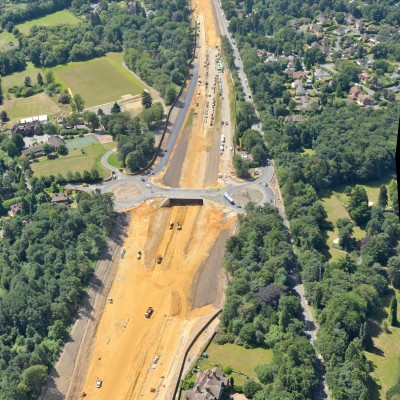

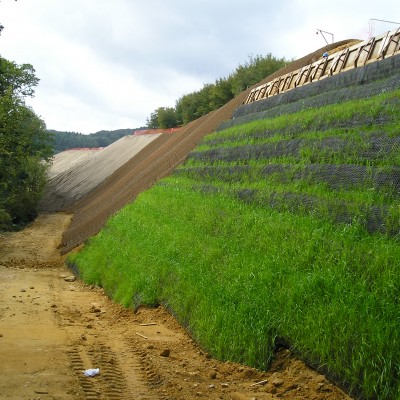
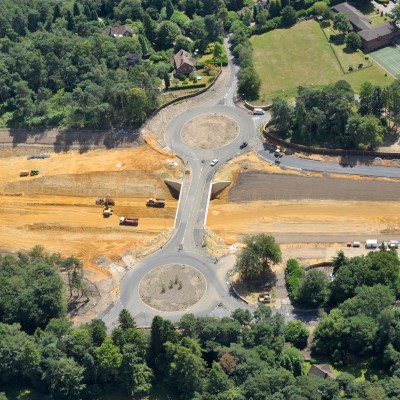
The A3 Hindhead Improvement Scheme (6.5 km) creates a continual dual carriageway link between London and Portsmouth. The site poses a number of environmental and ecological constraints as the route passes through areas of Ancient Woodland, a Site of Special Scientific Interest, Special Protected Areas and Areas of Outstanding Natural Beauty. The site also provides a habitat for a range of reptiles, mammals and birds, including a number of protected species such as adder, dormice, badgers and rare heathland birds.
A wide range of ecological and environmental mitigation measures have been incorporated into the design of the new road scheme, including extensive areas of woodland, heathland and species-rich grassland habitat creation.
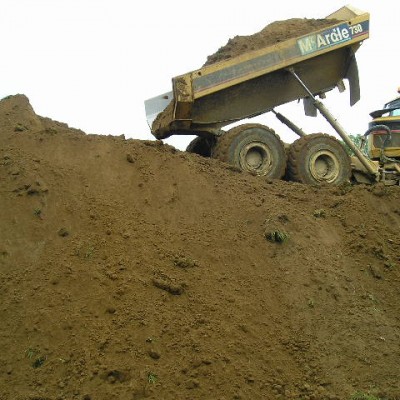
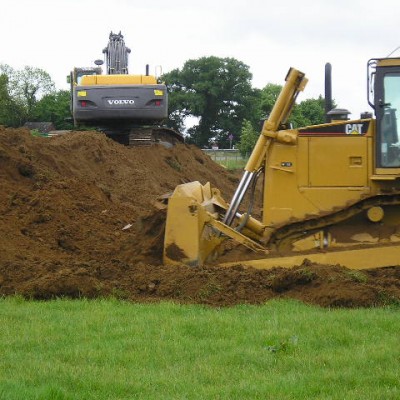
Tim O’Hare and Helen Stanley have been involved with the project since its pre-Public Enquiry stage, where they undertook a Soil Resource Survey of the entire site to support the Environmental Statement. Following the approval of the road scheme, Tim O’Hare produced a Soil Management Strategy for the recovery, storage and re-use of all site soils, including 5 distinct topsoil types. This information was incorporated within the detailed engineering and landscape design specifications. Since the commencement of the construction phase several years later, Tim O’Hare Associates has provided soil science monitoring services for the project.
The role includes the following tasks:
- Soil Resource Survey – identification and quantification of the major soil types and assessment of their potential for re-use within the landscape and ecological design.
- Soil Management Strategy – development of best practice guidelines for stripping and stockpiling the soils, soil handling requirements, cultivation techniques and soil amelioration methods.
- Sampling and testing – topsoils and subsoils whilst stored in stockpiles to confirm their composition and quality after soil stripping operations.
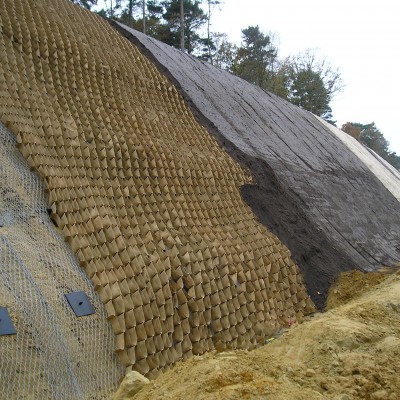
- Inspection and monitoring of soiling works including soil handling subsoil and topsoil placement, decompaction measures, surface cultivations, fertiliser application, soil amelioration, tree pit construction, planting, seeding, and hydro-seeding to the embankments, cuttings, attenuation ponds, habitat mitigation areas and other outlying areas.